Overworked and Understaffed: Why Your Pharmacist Can't Give You the Consultation You Deserve — and What You Can Do About It
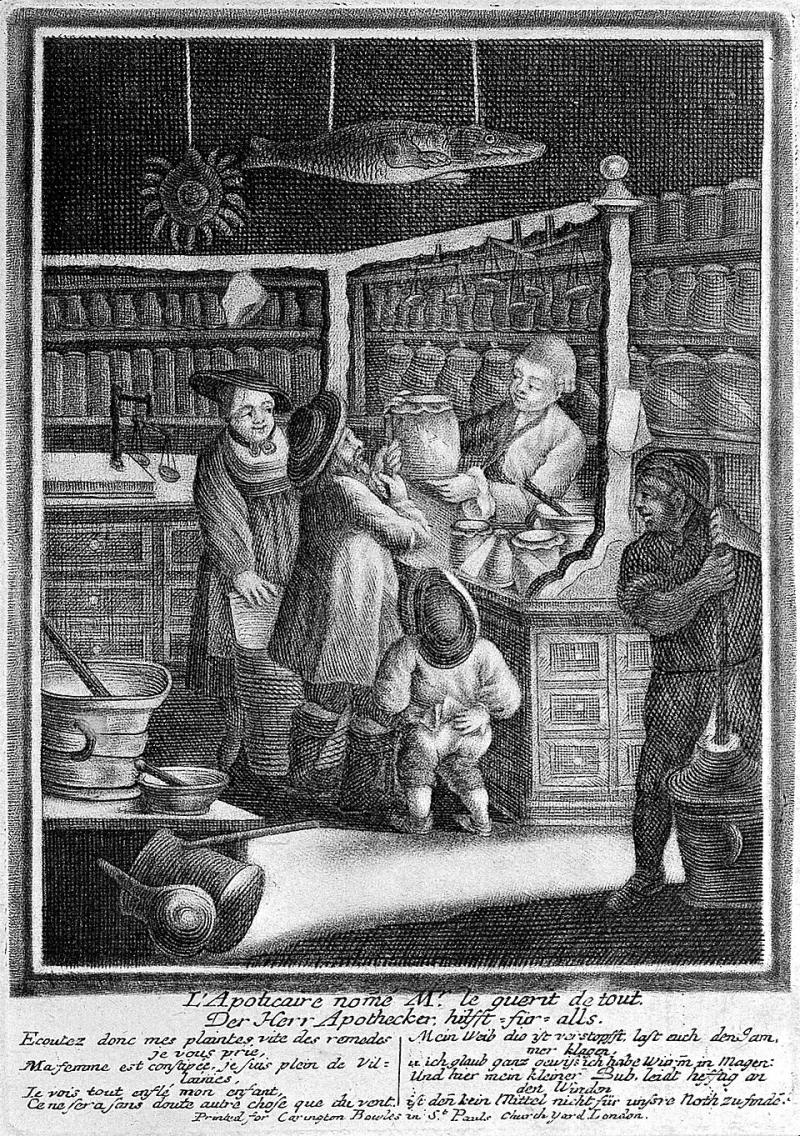
Photo: Unknown, CC BY 4.0, via Wikimedia Commons
The Most Accessible Clinician You're Probably Not Fully Using
There are more than 88,000 community pharmacies operating across the United States. Unlike primary care physicians, pharmacists require no appointment, no referral, and no copay for a conversation. In theory, they represent one of the most democratically available sources of clinical expertise in American healthcare. In practice, however, the average pharmacist interaction lasts fewer than two minutes — and for millions of patients picking up complex, high-stakes prescriptions, that simply is not enough.
This is not a reflection of pharmacist competence or indifference. It is the predictable consequence of a system that has, over decades, restructured the pharmacy around transaction volume rather than patient care. Understanding the forces at work — and knowing precisely how to navigate them — can make a significant difference in how safely and effectively you manage your medications.
What Pharmacists Are Actually Dealing With Behind the Counter
To appreciate why meaningful consultations are so difficult to obtain, consider what a typical community pharmacist manages on any given shift. Many chain pharmacy locations fill between 300 and 600 prescriptions per day. Alongside dispensing, pharmacists are simultaneously responsible for verifying insurance authorizations, conducting medication therapy management reviews for Medicare Part D patients, administering vaccines, counseling on over-the-counter products, and fielding phone calls from both patients and prescribers.
Insurance-related administrative tasks alone consume a substantial portion of every shift. Prior authorizations, billing disputes, and formulary substitutions require pharmacist attention and judgment — work that is largely invisible to patients standing at the counter but genuinely time-consuming on the clinical side.
Staffing shortages have intensified these pressures considerably in recent years. Many pharmacies operate with fewer technicians than they did a decade ago, placing additional logistical burdens on the pharmacist of record. The result is a professional who is clinically trained to do far more than circumstances routinely allow.
The Counseling Requirement That Often Goes Unfulfilled
Federal law — specifically the Omnibus Budget Reconciliation Act of 1990, commonly known as OBRA '90 — requires that pharmacists offer counseling to Medicaid patients receiving new prescriptions. Most states have extended similar requirements to all patients. In practice, however, this obligation is frequently discharged through a perfunctory question at the register: "Do you have any questions for the pharmacist today?"
Asked quickly, often by a pharmacy technician rather than the pharmacist, and delivered at a moment when most patients are simply trying to get home, this question rarely generates the substantive exchange the law intended. Patients who say "no" — often because they do not yet know what they do not know — leave without the counseling that could prevent dangerous errors, missed doses, or harmful interactions.
Recognizing this gap is the first step toward closing it.
Questions That Are Worth Your Time — and the Pharmacist's
Not every prescription warrants an extended consultation, but certain situations genuinely do. If any of the following apply to your circumstances, you should make a deliberate effort to speak with a pharmacist before leaving the pharmacy:
- You are starting a medication for the first time. Understanding how a drug works, what side effects to anticipate, and how to take it correctly is foundational to treatment success.
- You take multiple medications. Polypharmacy — the concurrent use of five or more drugs — significantly elevates the risk of interactions. A pharmacist review of your full medication list is one of the most valuable safety checks available to you.
- You have been prescribed a medication with a narrow therapeutic index. Drugs such as warfarin, lithium, digoxin, and certain thyroid medications require precise dosing. Small deviations can have serious consequences.
- Your prescription was changed by an insurance formulary substitution. When your insurer substitutes a therapeutically similar drug for the one your physician prescribed, a pharmacist can help you understand whether the substitution is genuinely equivalent for your condition.
- You are pregnant, breastfeeding, or managing a chronic condition. These circumstances can fundamentally alter how a medication behaves in your body.
When you arrive at the counter, a simple, direct statement — "I have a few questions I'd like to go over with the pharmacist" — is more effective than a vague inquiry. Specificity signals that you are seeking a real conversation, not a reassurance.
How to Secure a Meaningful Consultation
Timing matters considerably. Pharmacies are typically busiest between 11 a.m. and 2 p.m. and during the late afternoon rush. If your schedule permits, visiting during off-peak hours — mid-morning or early evening on weekdays — increases the likelihood that a pharmacist will have more than a few seconds to devote to your concerns.
For complex medication questions, consider calling ahead. Ask whether you can schedule a brief consultation, or inquire about a medication therapy management (MTM) appointment. MTM services are covered benefits under most Medicare Part D plans and are designed precisely for the kind of comprehensive medication review that a counter interaction rarely allows. Many commercial insurers have adopted similar benefits, though patients are seldom proactively informed of them.
If your pharmacy has a private consultation window or room — many do — request to use it. The physical separation from the general counter reduces interruptions and signals to both you and the pharmacist that the conversation deserves focused attention.
When the Pharmacy Counter Is Not Enough
There are circumstances in which the community pharmacy setting, regardless of how skillfully you navigate it, is insufficient. Patients managing complex regimens — particularly those with cancer diagnoses, organ transplants, HIV, or rare conditions — often benefit from consultation with a clinical pharmacist embedded within a specialty practice or hospital outpatient clinic. These professionals operate outside the high-volume retail environment and can provide the depth of analysis that complex cases require.
Your primary care physician or specialist can often facilitate a referral to a clinical pharmacist, or at minimum, conduct a comprehensive medication review during an office visit. Do not hesitate to request one, particularly if you have recently been discharged from a hospital, had a new diagnosis added to your medical history, or begun taking four or more medications simultaneously.
Advocating for Yourself in a System Not Designed for It
The American pharmacy system, as currently structured, prioritizes throughput. That is a systemic failure, not a personal one — and it is not something individual patients caused or can fully correct. What patients can do, however, is approach their pharmacy interactions with the same intentionality they bring to physician appointments.
Prepare a written list of your questions before you arrive. Bring a current and complete medication list, including supplements and over-the-counter products. Ask for clarification in plain language if a response is unclear. And recognize that the pharmacist standing behind that counter holds a doctoral-level clinical education — one that, under the right conditions, can be genuinely instrumental to your health.
The fifteen-minute limit is real. The workarounds, however, are also real — and they are worth pursuing.