Out of Stock, But Not Out of Reach: How the Pharmaceutical Supply Chain Creates Artificial Scarcity — and What Patients Can Do About It
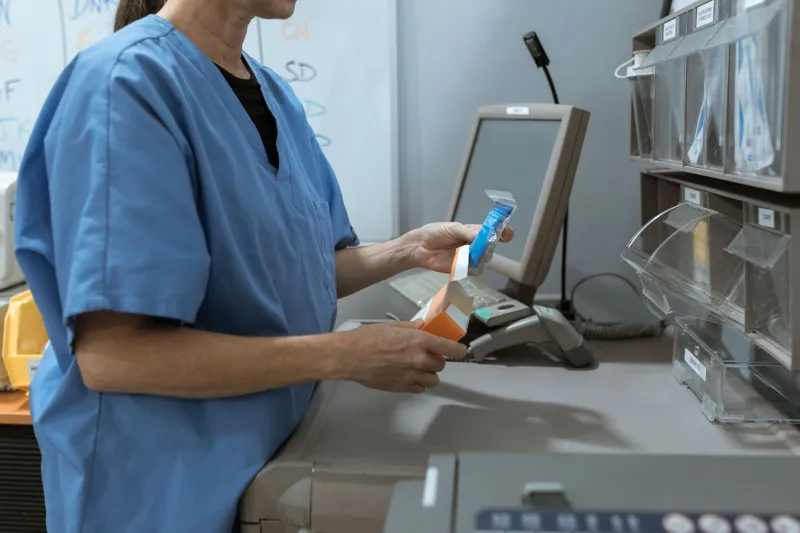
Few experiences are more frustrating for a patient than arriving at the pharmacy counter — prescription in hand — only to be told that the medication is unavailable and that obtaining it will require either waiting several days or paying expedited fees to source it elsewhere. What pharmacists often do not explain, and what most consumers never think to ask, is precisely why that drug is unavailable in the first place.
The answer, in many cases, has less to do with a genuine shortage and more to do with the layered, often opaque mechanics of pharmaceutical inventory management.
The Three-Tier Supply Chain Most Patients Never See
Before a medication reaches the pharmacy shelf, it travels through a distribution network that few consumers ever consider. Pharmaceutical manufacturers produce drugs and sell them primarily to a small group of large wholesale distributors — companies such as McKesson, AmerisourceBergen, and Cardinal Health, which together control the majority of drug distribution in the United States. These wholesalers then supply retail pharmacies, hospital systems, and specialty pharmacies.
The critical detail here is that inventory decisions are made at every tier of this chain, and those decisions are driven by financial incentives rather than patient need. Wholesalers purchase drugs in bulk and may hold inventory strategically, particularly for medications whose prices are expected to rise. Retail pharmacies, operating on thin margins, often stock only what their purchasing algorithms predict they will sell within a defined window — which means that slower-moving medications, even those critical to specific patients, may simply not be maintained on-site.
The result is a system where a drug can be physically plentiful at the wholesale level while simultaneously appearing unavailable at the retail counter.
How Inventory Algorithms Affect Your Prescription Access
Large pharmacy chains rely heavily on automated inventory systems to determine what medications to stock, in what quantities, and when to reorder. These systems analyze historical dispensing data, regional demand patterns, and contractual purchasing arrangements. While efficient in theory, they can create real-world gaps for patients whose needs fall outside predictable patterns.
A medication prescribed for a rare condition, recently approved by the FDA, or subject to a recent formulary change may not yet register as a priority in a pharmacy's restocking algorithm. Similarly, if a drug's price point makes it a lower-margin product for the pharmacy, the system may deprioritize it in favor of alternatives that generate greater revenue per transaction.
Patients who require compounded medications or brand-name drugs that lack a generic equivalent are particularly vulnerable to these dynamics. When those patients are told a medication is "out of stock," what is often actually happening is that the pharmacy has not ordered it — not that the drug does not exist in the supply chain.
The Rush Fee Problem
When a medication is unavailable at a patient's preferred pharmacy, several paths are typically offered: waiting for a standard restock, which may take days; paying for an emergency transfer from another location; or sourcing the drug through a specialty distributor at a significantly elevated cost. In each case, the patient absorbs the financial consequence of an inventory gap that was not of their making.
Rush fees and emergency sourcing charges are rarely disclosed upfront as optional. They are presented as the natural cost of an unfortunate situation. But patients who understand how the supply chain works are better positioned to question whether those fees are truly necessary — or whether a simple phone call to a competing pharmacy or a request to the pharmacist to contact the wholesaler directly might resolve the issue without additional cost.
What You Can Do When Your Medication Is Supposedly Unavailable
Navigating a medication availability issue requires both persistence and a working knowledge of the system. The following strategies have proven effective for many patients.
Ask the pharmacist directly whether the drug is out of stock or simply not ordered. These are meaningfully different situations. If the pharmacy did not place an order, ask whether an emergency order can be submitted to the wholesaler. In many cases, same-day or next-day delivery from a wholesale distributor is possible and far less expensive than the alternatives pharmacies may present.
Contact independent pharmacies in your area. Large chain pharmacies operate on centralized purchasing systems that limit local flexibility. Independent pharmacies often have more discretion in their ordering and may maintain relationships with multiple wholesalers, giving them broader access to medications that chains cannot quickly source.
Use the FDA's drug shortage database. The FDA maintains a publicly accessible database of current drug shortages at accessdata.fda.gov. If your medication appears there, you are dealing with a genuine supply disruption. If it does not, the availability issue is likely a local or regional inventory decision rather than a true shortage — and that distinction matters when you are negotiating with your pharmacy.
Request a partial fill. If a pharmacy has some quantity of your medication but not your full prescribed amount, ask for a partial fill to bridge the gap while the remainder is sourced. Most state pharmacy laws permit this practice, and it prevents a complete interruption in your treatment.
Speak with your prescribing physician. Your doctor may be unaware that you are experiencing an access problem. In some cases, a therapeutic alternative that is more readily available can be prescribed temporarily. Your physician can also contact the pharmacy directly, which often accelerates the resolution process.
Verify pricing before accepting any rush or sourcing fees. If a pharmacy proposes to charge you additional fees to obtain your medication, ask for a written explanation of what those fees cover. Compare the total cost against what you would pay at a different pharmacy before agreeing to anything.
The Broader Question of Transparency
The opacity of pharmaceutical inventory management is not incidental — it is structural. Pharmacies are not required to disclose their purchasing arrangements, their wholesaler relationships, or the reasoning behind their stocking decisions. Patients are left to navigate a system that was not designed with their convenience or financial interests as a primary consideration.
Advocacy organizations and some state legislatures have begun pushing for greater transparency in drug pricing and distribution, but meaningful reform remains slow. In the interim, consumer awareness remains the most effective tool available.
Knowing that "out of stock" is often a business decision rather than a fixed reality — and knowing the right questions to ask — can mean the difference between an unnecessary delay and a medication you receive on time, at a price that reflects what the market actually supports.
A Final Word on Informed Advocacy
At Royal Health Pharma, our commitment is to provide consumers with the knowledge necessary to engage the healthcare system as informed participants rather than passive recipients. The pharmaceutical supply chain is complex, but it is not impenetrable. Patients who understand its structure are better equipped to advocate for themselves, question unnecessary charges, and ensure that a logistical gap in an inventory system does not become a gap in their medical care.
If you have experienced medication availability issues, document the details — dates, pharmacy responses, and any fees you were asked to pay. That record may prove useful if you choose to file a complaint with your state board of pharmacy or seek assistance from a patient advocacy organization.