Brand-Name, Generic, or Biosimilar: How to Decode Your Medication Options and Lower What You Pay at the Pharmacy

Photo: prescription medication bottles with price tags and insurance card on pharmacy counter, via img.freepik.com
Standing at a pharmacy counter or navigating an insurance formulary, most Americans face a choice they are not fully equipped to make. The pharmacist asks whether you would like the brand or the generic. Your insurance plan's drug list shows three tiers of pricing, with unfamiliar product names scattered throughout. A newer option—something called a biosimilar—appears on your explanation of benefits but comes with no explanation of what it actually is.
This confusion is not accidental. The pharmaceutical marketplace has grown considerably more complex over the past decade, and the vocabulary required to navigate it has not been widely taught to the people who need it most: patients. Understanding the distinctions between brand-name medications, traditional small-molecule generics, authorized generics, and biological medications and their biosimilar counterparts is no longer a matter of academic interest. It is a practical necessity with direct implications for both health outcomes and household finances.
Brand-Name Medications: What You Are Actually Paying For
When a pharmaceutical company develops a new drug, it invests years of research, clinical trials, and regulatory review before the product can be sold. Upon approval, the FDA grants the manufacturer a period of market exclusivity—typically between five and twelve years, depending on the drug category and various regulatory designations—during which no competitor may sell the same compound. This exclusivity period is intended to allow companies to recoup their development investment.
During this window, brand-name drugs carry premium prices that reflect not just manufacturing costs, but the amortization of research and development expenses, marketing, and profit. Once exclusivity expires, competitors may apply to produce equivalent versions, and prices typically fall substantially.
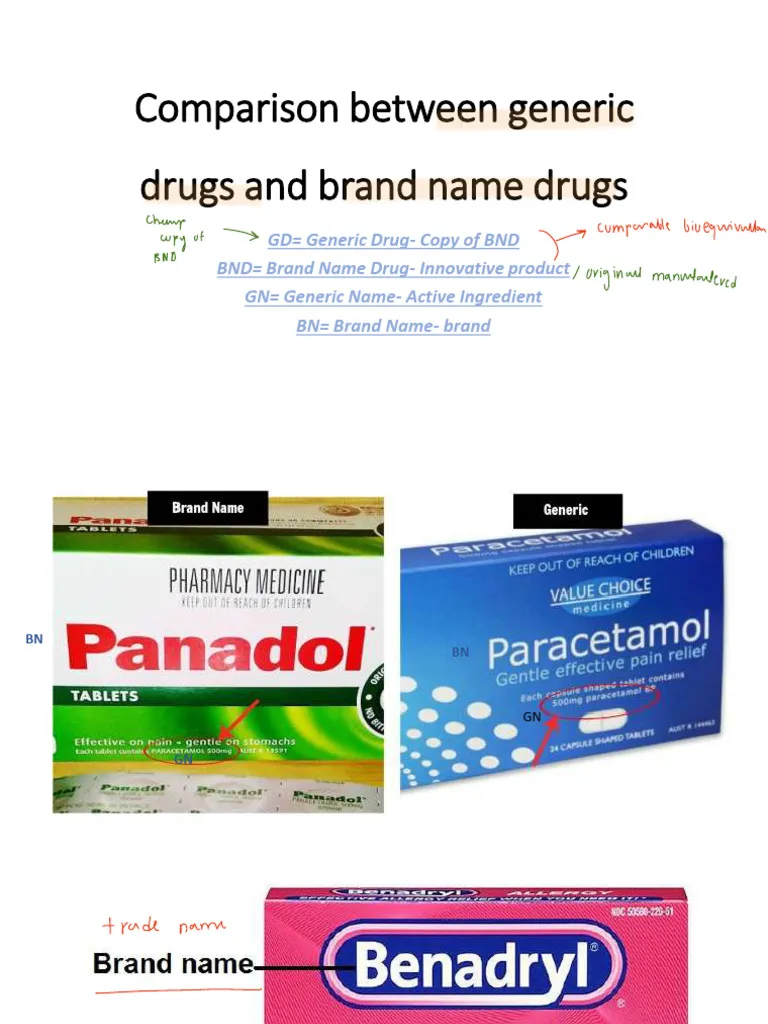
Brand-name drugs are not inherently superior in terms of therapeutic effect once generics enter the market. The active ingredient, dosage, and mechanism of action are identical. What changes is who manufactures the product and what you pay for it.
Traditional Generics: The Proven Cost-Saving Option
A generic drug is a pharmaceutical product that contains the same active ingredient as its brand-name reference drug, in the same strength, dosage form, and route of administration. To receive FDA approval, a generic manufacturer must demonstrate bioequivalence—meaning the generic delivers the active ingredient into the bloodstream at a rate and extent that falls within an acceptable statistical range of the original product's performance.
The FDA's standard for bioequivalence requires that the generic's pharmacokinetic profile—specifically its area under the concentration-time curve and peak concentration—fall within 80 to 125 percent of the reference drug's. In practice, approved generics cluster far closer to the reference value than these outer bounds suggest, with the average difference typically falling within a few percentage points.
Generics may look different from their brand-name counterparts. Inactive ingredients, such as fillers, dyes, and coatings, can vary between manufacturers. For most patients, these differences are clinically insignificant. In rare cases—particularly with narrow therapeutic index drugs such as certain thyroid medications, anticoagulants, or anticonvulsants—even small variations may warrant closer monitoring. Patients taking these drug classes should discuss any switch from brand to generic with their prescribing physician.
The financial case for generics is straightforward. The FDA reports that generic drugs account for roughly 90 percent of all prescriptions dispensed in the United States, yet represent only about 18 percent of total drug spending. The cost savings at the individual level can be substantial—often 80 to 85 percent less than the brand-name equivalent.
Authorized Generics: A Nuance Worth Understanding
A lesser-known category sits between brand-name and generic: the authorized generic. This is a product manufactured by the brand-name company itself—or licensed to another manufacturer—that is sold under a different label at a lower price point, often during the period immediately following patent expiration.
Authorized generics are chemically identical to the brand-name product, since they originate from the same manufacturer and formulation. They are not subject to the same bioequivalence testing requirements as standard generics because they are, in essence, the same product with a different label. For patients who are concerned about variability between manufacturers, authorized generics can offer a middle-ground option worth asking about at the pharmacy.
Biologics and Biosimilars: The New Frontier in Medication Complexity
Traditional small-molecule drugs—aspirin, statins, most antibiotics—are synthesized through chemical processes and have relatively simple, well-defined molecular structures. They can be replicated with a high degree of precision, which is why generic equivalence is straightforward to establish.
Biological medications, or biologics, are an entirely different class. These are large, complex molecules derived from living cells—typically proteins such as monoclonal antibodies, hormones, or enzymes. They are used to treat conditions including rheumatoid arthritis, Crohn's disease, certain cancers, diabetes, and multiple sclerosis. Because they are produced through biological processes rather than chemical synthesis, they cannot be copied with the same exactness as small-molecule drugs.
This is where biosimilars enter the picture. A biosimilar is a biological product that is highly similar to an already-approved biologic—called the reference product—with no clinically meaningful differences in terms of safety, purity, or potency. The FDA's approval pathway for biosimilars, established under the Biologics Price Competition and Innovation Act of 2009, requires manufacturers to demonstrate this high degree of similarity through analytical studies, clinical pharmacology data, and in some cases additional clinical trials.
Some biosimilars receive an additional designation: interchangeable. An interchangeable biosimilar meets a higher evidentiary standard and may be substituted for the reference product at the pharmacy level without requiring the prescriber's intervention—similar to how a standard generic can be substituted for a brand-name small-molecule drug in most states.
Biosimilars represent a significant and growing opportunity for cost savings. Biologic medications are among the most expensive in the US market, with some treatments costing tens of thousands of dollars annually. Biosimilar versions typically enter the market at a 15 to 35 percent discount relative to the reference product—less dramatic than the savings seen with small-molecule generics, but meaningful given the high baseline costs involved.
How to Navigate These Choices With Your Insurance and Provider
Understanding these categories is only useful if that knowledge is applied in the context of your specific insurance plan and medical situation. Several practical strategies can help.
Review your plan's formulary annually. Insurance formularies—the lists of covered medications and their cost-sharing tiers—change each year. A drug that was covered at a low copay last year may have moved to a higher tier, while a newly approved biosimilar may now be preferred. During open enrollment, compare formularies if you have multiple plan options.
Ask your pharmacist which tier your medication falls under. Pharmacists can often identify whether a lower-cost alternative is available within the same drug class, or whether a prior authorization process could make a preferred option accessible.
Discuss therapeutic alternatives with your physician. Within most drug classes, multiple medications treat the same condition. If one is substantially more expensive under your plan than another with a comparable efficacy and safety profile, that conversation is worth having.
Inquire specifically about biosimilar options for biologic medications. If you are currently taking a biologic for a chronic condition, ask your prescriber whether an interchangeable biosimilar is available and appropriate for your treatment plan. The cost difference can be significant over time.
Explore manufacturer patient assistance programs. Brand-name manufacturers frequently offer copay assistance cards or patient assistance programs for individuals who cannot afford their medications. These programs vary widely in eligibility criteria and benefit levels, but they are worth researching for high-cost therapies.
Making Sense of the Marketplace
The American pharmaceutical marketplace offers more options than ever before—and with those options comes greater responsibility for consumers to understand what they are taking and why. The distinction between a brand-name drug, a generic, an authorized generic, a biologic, and a biosimilar is not merely semantic. Each category reflects a different regulatory history, manufacturing process, and cost structure, all of which have direct bearing on what you pay and what you receive.
At Royal Health Pharma, our commitment is to equip consumers with the knowledge necessary to engage confidently in these decisions. Pharmaceutical literacy is not a specialty skill—it is a fundamental component of informed healthcare participation. The more clearly you understand your options, the better positioned you are to work with your providers and insurers to find the safest, most effective, and most affordable path forward.