Five Persistent Myths About Generic Drugs That Are Quietly Draining American Wallets
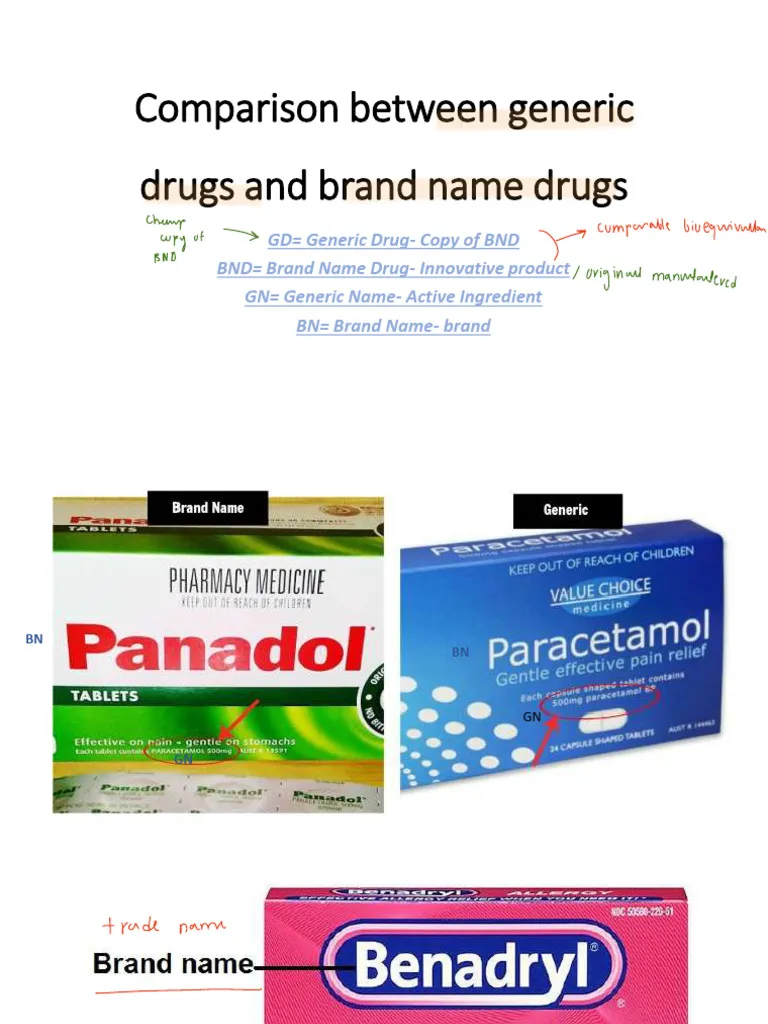
Photo: generic versus brand name prescription medication pills comparison, via imgv2-1-f.scribdassets.com
The Billion-Dollar Belief Gap
In 2023, the Association for Accessible Medicines estimated that generic and biosimilar medications saved the U.S. healthcare system approximately $373 billion in a single year. That figure is staggering—and yet, a meaningful segment of American patients continues to request brand-name drugs at the pharmacy counter, often paying dramatically more for products that are, by federal regulatory definition, therapeutically equivalent to their lower-cost counterparts.
This is not simply a matter of consumer preference. It reflects a persistent set of misconceptions about how generic drugs are developed, approved, and manufactured—misconceptions that carry real financial consequences for patients, insurers, and the broader healthcare system. Below, Royal Health Pharma addresses five of the most common myths, drawing on FDA guidance, peer-reviewed research, and the scientific principles that govern pharmaceutical development.
Myth #1: Generic Drugs Are Made With Inferior Ingredients
The Reality: Generic medications are required by the U.S. Food and Drug Administration to contain the same active pharmaceutical ingredient (API) as the brand-name reference drug—in the same dosage form, strength, and route of administration.
The FDA's Office of Generic Drugs enforces rigorous standards that manufacturers must meet before any generic product reaches pharmacy shelves. These standards govern not only the identity and concentration of the active ingredient but also the purity, stability, and manufacturing conditions of the final product. Generic manufacturers are subject to the same Current Good Manufacturing Practice (CGMP) regulations as brand-name pharmaceutical companies, and the FDA conducts facility inspections both domestically and internationally to verify compliance.
What may differ between a brand-name drug and its generic equivalent are inactive ingredients—binders, fillers, colorants, and coatings used to construct the tablet or capsule. These excipients are generally inert and do not affect the drug's therapeutic action. In rare cases, a patient may have a sensitivity to a specific inactive ingredient; this is a legitimate, though uncommon, concern that can be addressed by consulting a pharmacist about available formulations.
Myth #2: Generic Drugs Do Not Have to Prove They Work the Same Way
The Reality: Before the FDA approves a generic drug, the manufacturer must demonstrate bioequivalence to the brand-name reference product through rigorous scientific testing.
Bioequivalence means that the generic drug delivers the same amount of active ingredient to the bloodstream, at the same rate, as the original brand-name product. This is established through pharmacokinetic studies measuring parameters such as the maximum drug concentration in the blood (Cmax) and the total drug exposure over time (AUC—area under the curve). The FDA requires that these measures fall within a 90% confidence interval of 80% to 125% of the brand-name drug's values—a standard that clinical research has consistently shown to be therapeutically meaningful.
Critics sometimes misread this range as evidence of permissible inferiority. In practice, the average difference in bioavailability between approved generics and their brand-name counterparts is approximately 3.5%, well within the margin of clinical insignificance. The 80–125% range exists to account for natural biological variability in pharmacokinetic measurements—variability that also occurs between two doses of the same brand-name product taken by the same individual on different days.
Myth #3: Brand-Name Drugs Are Developed by More Reputable Companies
The Reality: Many generic drugs are manufactured by the same facilities—and sometimes by the same companies—that produce brand-name medications.
This is one of the pharmaceutical industry's least-publicized realities. Major brand-name manufacturers frequently produce authorized generics—identical copies of their own brand-name drugs, sold under the generic name at a lower price—either independently or through licensing agreements. Additionally, a number of the world's largest generic pharmaceutical companies also manufacture brand-name products, operating across both market segments.
The notion that generic manufacturers operate as cut-rate producers in substandard facilities is simply not supported by the regulatory record. The FDA's enforcement actions against manufacturing violations apply equally to all pharmaceutical producers, regardless of whether they are making brand-name or generic products. When a facility fails to meet CGMP standards, the agency issues warning letters, mandates recalls, and in serious cases, restricts importation—irrespective of the manufacturer's brand identity.
Myth #4: Switching to a Generic Is Risky for Patients With Serious Conditions
The Reality: For the vast majority of medications and patient populations, switching to a bioequivalent generic is clinically safe and supported by professional guidelines.
This myth is perhaps the most consequential in terms of patient behavior, because it disproportionately affects individuals managing chronic, serious conditions—precisely the patients who stand to benefit most from the cost savings generics provide. The concern is most frequently raised in the context of narrow therapeutic index (NTI) drugs: medications such as levothyroxine, warfarin, lithium, and certain antiepileptics, where small differences in blood concentration can have significant clinical effects.
For NTI drugs, the FDA applies additional bioequivalence standards and recommends that clinicians monitor patients when any formulation change occurs—whether switching from brand to generic, generic to generic, or even between different lots of the same brand-name product. This is sound clinical practice, not evidence that generics are inherently unsafe.
For the overwhelming majority of drug classes—including statins, ACE inhibitors, beta-blockers, metformin, SSRIs, and many others—generic substitution is endorsed by the American Heart Association, the American Diabetes Association, the American College of Physicians, and numerous other major medical organizations as a clinically appropriate and cost-effective practice.
Myth #5: The Price Difference Means There Must Be a Quality Difference
The Reality: The cost disparity between brand-name and generic drugs reflects market exclusivity and research cost recovery—not manufacturing quality or therapeutic value.
When a pharmaceutical company develops a new drug, it typically holds a patent that grants market exclusivity for a defined period—generally 20 years from the date of patent filing, though effective exclusivity is often shorter due to the time required for clinical trials and regulatory approval. During this window, the manufacturer can set prices without generic competition, recovering the substantial investment in research, development, and clinical trials.
Once patent protection expires, other manufacturers may apply for FDA approval to produce generic versions. The resulting competition reliably drives prices down—sometimes by 80 to 85 percent within the first year of generic availability. This price reduction reflects the absence of duplicated R&D costs, not a reduction in product quality. Generic manufacturers invest in manufacturing infrastructure and regulatory compliance, not in the original discovery and clinical development process that the brand-name company has already completed.
For American consumers, this distinction matters enormously. A patient paying $300 per month for a brand-name statin whose generic equivalent costs $15 is not purchasing a superior product—they are paying for a marketing legacy and a patent history.
Making Confident, Cost-Effective Choices
The evidence supporting generic medications is extensive, consistent, and institutionally endorsed at the highest levels of American medicine and pharmaceutical regulation. This does not mean that every patient in every situation should automatically accept a generic substitution without discussion—individual circumstances, specific drug classes, and personal medical histories all warrant consideration. What it does mean is that decisions about brand versus generic should be driven by clinical reasoning and pharmacist guidance, not by myth.
At Royal Health Pharma, we believe that pharmaceutical literacy is a form of healthcare empowerment. Understanding how generic drugs are regulated and why they are priced as they are equips patients to engage more effectively with their healthcare providers, ask better questions at the pharmacy counter, and make decisions that serve both their health and their financial wellbeing.
If you are currently paying out-of-pocket or high copays for a brand-name medication, we encourage you to ask your pharmacist whether a bioequivalent generic is available. In most cases, the answer will be yes—and the savings may be substantial.