Expired Medications Are Piling Up in American Homes — Here Is What the Risks Actually Look Like
A Hidden Problem Sitting Inside Your Medicine Cabinet
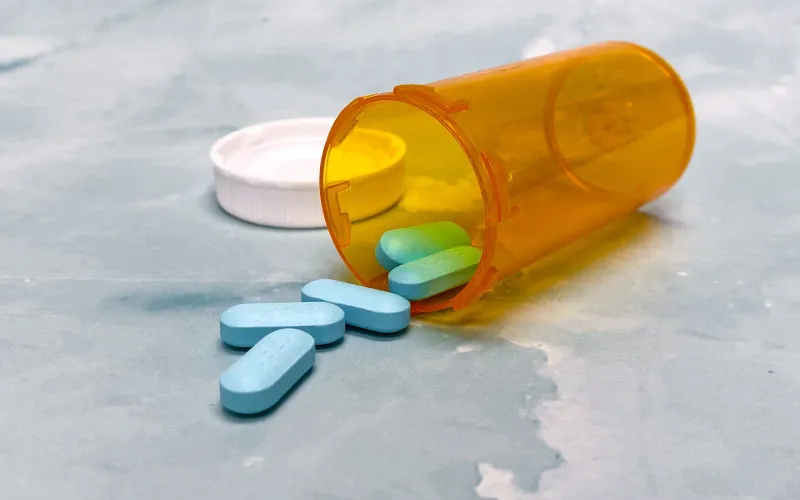
Open the average American medicine cabinet and you are likely to find something that belongs in a disposal bin rather than on a shelf. A 2023 survey conducted by the American Pharmacists Association found that roughly two-thirds of U.S. households contain at least one expired prescription or over-the-counter medication. Many of those bottles are years past their labeled date — some are over a decade old.
This is not carelessness. It is the predictable result of a healthcare system in which drug costs are high, refill logistics are complicated, and the guidance around expiration dates has historically been vague. People hold onto medications because they paid a significant amount for them, because they are uncertain whether the expiration date is a hard deadline or a conservative estimate, and because they hope to avoid a future co-pay by keeping a backup supply on hand. These are rational instincts. They are also, pharmacists caution, instincts that can quietly compromise health outcomes.
What an Expiration Date Actually Means — and What It Does Not
The expiration date stamped on a medication bottle is the manufacturer's guarantee that the drug will remain at full potency and stability through that date, provided it has been stored correctly. It is not, strictly speaking, a declaration that the drug becomes dangerous the following day.
The U.S. Food and Drug Administration has acknowledged that many medications retain meaningful potency well beyond their printed expiration date. A widely cited study conducted in collaboration with the Department of Defense — the Shelf Life Extension Program — found that a substantial portion of tested drugs remained stable and effective years after their labeled expiration. Certain formulations, including some antihistamines, blood pressure medications, and analgesics in tablet form, showed particularly durable stability.
However, the critical word in all of that research is correctly. Most American households do not store medications correctly. The bathroom medicine cabinet — still the most common storage location — exposes drugs to humidity and temperature fluctuations that accelerate chemical degradation. A medication that might retain efficacy for years in a cool, dry environment can deteriorate significantly faster when stored above a bathroom sink.
When Expired Medications Cross From Ineffective to Genuinely Dangerous
Pharmacists draw an important distinction between medications that simply lose potency over time and those that undergo chemical changes that make them actively harmful.
The most frequently cited example of the latter is tetracycline, an older antibiotic class that can break down into compounds associated with kidney damage. While modern tetracycline formulations have been reformulated to reduce this specific risk, the principle holds: some drugs do not merely weaken — they transform.
Liquid medications, including antibiotic suspensions and insulin preparations, are particularly susceptible to degradation. Suspensions can separate and lose uniform dosing. Insulin that has been stored improperly or used past its expiration may deliver unpredictable glucose control, a risk that carries serious consequences for people managing diabetes.
Epilepsy medications, blood thinners, and narrow therapeutic index drugs — those for which the difference between a therapeutic dose and a toxic or subtherapeutic dose is small — present particular concern. If a medication in one of these categories has degraded, the patient may be receiving less active compound than intended, potentially leaving a serious condition undertreated without any visible sign that something has gone wrong.
For common over-the-counter drugs such as ibuprofen or acetaminophen in solid tablet form, the more likely consequence of expiration is reduced effectiveness rather than toxicity. But reduced effectiveness is not trivial. A person managing chronic pain or a high fever who unknowingly relies on a degraded medication is not receiving the treatment they believe they are.
Why Americans Stockpile: The Cost Connection
To address medication hoarding meaningfully, it is necessary to understand why it happens in the first place — and cost anxiety sits at the center of that explanation.
When a prescription carries a substantial co-pay, or when a patient is paying out of pocket entirely, the financial logic of keeping every remaining pill becomes clear. Discarding a partially used bottle of a medication that cost $80 at the pharmacy feels genuinely wasteful when the next illness or flare-up may require another $80 purchase. Some patients deliberately request larger quantities than they currently need specifically to build a reserve supply.
Pharmacists who work directly with patients frequently hear this reasoning. The solution, many of them argue, is not simply to tell patients to throw away their medications — it is to help patients address the cost anxiety driving the behavior in the first place.
If cost is a factor in your decision to hold onto medications, a direct conversation with your prescribing physician is a reasonable first step. Physicians can adjust quantities prescribed to align more closely with actual need, explore whether a lower-cost generic or therapeutic alternative is appropriate, or connect patients with manufacturer assistance programs. Many pharmaceutical manufacturers offer patient assistance programs for brand-name medications that can substantially reduce out-of-pocket expense for qualifying individuals.
Safe Disposal: Options Most Americans Have Never Used
For the medications already sitting in home cabinets past their expiration date, safe disposal is the appropriate next step — and there are more options available than most people are aware of.
DEA-authorized take-back programs are the gold standard. The Drug Enforcement Administration coordinates National Prescription Drug Take Back Day events twice each year, with collection sites at pharmacies, hospitals, and law enforcement locations across the country. Between events, many pharmacies maintain permanent take-back kiosks that accept controlled and non-controlled substances. The DEA's website provides a locator tool for finding authorized collection sites by zip code.
Authorized mail-back envelopes are available at many pharmacies and allow patients to mail medications directly to authorized disposal facilities. This option is particularly useful for patients with limited mobility or those in rural areas where take-back locations may be sparse.
For medications not covered by a nearby take-back program, the FDA recommends a specific at-home disposal method: mix the medication with an undesirable substance such as coffee grounds or dirt, place the mixture in a sealed bag, and dispose of it in household trash. This method reduces the likelihood that the medication will be recovered and misused.
Flushing medications is recommended only for a specific list of drugs — primarily opioids and certain other controlled substances — where the risk of accidental ingestion or misuse is considered to outweigh the environmental concern. The FDA maintains a published flush list for reference.
A Practical Framework for Managing Your Home Medication Supply
Pharmacists generally recommend a twice-yearly review of home medication supplies — a schedule that conveniently aligns with the DEA's take-back events. During that review, check expiration dates, assess whether medications are still being actively used, and confirm that storage conditions remain appropriate.
Medications prescribed for acute conditions that have since resolved — a short course of antibiotics, a post-surgical pain medication — should be disposed of promptly rather than retained "just in case." Antibiotic stockpiling carries particular risk, as self-treating with a retained antibiotic without proper diagnosis can contribute to antibiotic resistance and may delay appropriate care.
If you find yourself routinely holding onto medications out of financial concern, that pattern is worth raising with both your physician and your pharmacist. Both are positioned to help identify strategies — whether that involves generic substitution, dosage adjustments, assistance programs, or alternative formulations — that reduce the financial pressure driving the behavior.
The goal is not to make patients feel judged for a practice that is, at its root, a reasonable response to an expensive and confusing system. The goal is to replace that practice with something safer and equally practical.